
A coach-focused guide to reading personality in movement, restoring three-dimensional alignment from the feet up, and fast-tracking results with the Get Into Your Body™ Program.
Most coaches and talking therapists are trained to work with mindset, emotion, and behaviour - exploring beliefs, patterns, motivation, and goals. But there’s a missing piece that quietly shapes everything our clients do - and everything we feel in our own bodies throughout the day.
That missing piece is biomechanics.
What if burnout, emotional overwhelm, stalled progress, and “motivation problems” have less to do with mindset… and far more to do with how the ribs move, how the feet land, and how the pelvis organises under pressure?
What if personality isn’t just something we think - but something we do with our bones, joints, and breath?
Welcome to a biomechanical approach to coaching.
Why Personality and Biomechanics Can’t Be Separated
Every personality style - Controller, Helper, Achiever, Anxious Type, or Perfectionist - is rooted in a deep survival strategy. Think of these not as fixed categories, labels, or diagnoses, but as adaptive movement strategies the body adopts under repeated stress.
Over time, the nervous system encodes these strategies into the body itself:
Controller: Braced ribs, shallow upper-chest breathing, anterior pelvic tilt, toe-gripping
Helper: Collapsed sternum, head forward, slight pelvic tuck, heels-heavy stance
Achiever: “Hero chest,” lumbar compression, tight hip flexors, rigid push-off
Anxious Type: Fast, shallow breathing, elevated shoulders, posterior pelvic tilt, fussy feet
Perfectionist: Over-braced core, limited spinal flexion, precise but stiff feet, jaw/tongue holding
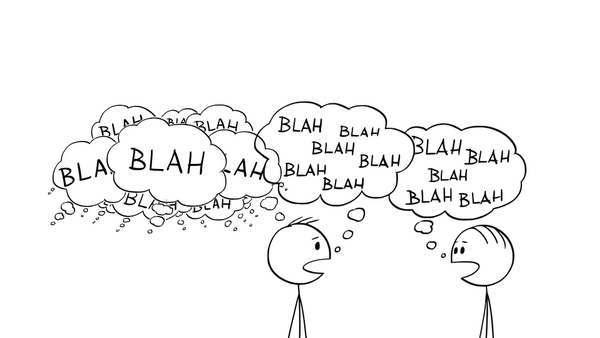
These postures become a kind of protective architecture. And once those structures calcify, mindset work hits a limit. The software may want change, but the hardware can’t execute it.
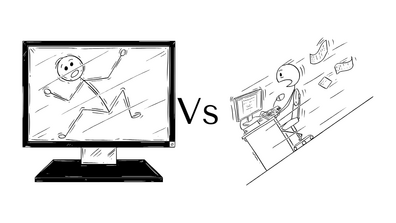
You can’t affirm or visualise your way out of a pelvis that won’t move, or a ribcage locked in fight-or-flight — especially when you don’t even realise your internal structure is part of the problem.
Slow-Motion Video: The Fastest Way to Read Personality in Motion
A short slow-motion walking video often reveals how a client meets load, uncertainty, and momentum - offering powerful clues about the strategies they rely on underpressure, expressed through the feet, pelvis, spine, ribcage, and jaw.
Assessing from the feet up shows:
how the arches respond
whether the ankles spring or freeze
if the knees lock or drift
whether the pelvis alternates or stays stuck
how the ribs behave with each step
whether the shoulders elevate
if the head leads instead of the body
Suddenly, the invisible becomes visible.
And once people can see their patterns, change accelerates dramatically - because once you can see what is no longer working → you can learn how to update it.
The Get Into Your Body™ Program: Coaching That Works With the Body
The method is simple, but profoundly powerful. It teaches people to assess their own body and reset their posture into a state where the system isn’t over-braced or collapsed.
From there, they learn to realign into mechanics that allow the body to adapt, alternate, and absorb force efficiently - retraining the body into a new normal, and integrating and maintaining this in daily life.
Assess: slow-motion gait video + posture + breath map
Reset: down-regulate bracing in the ribs, jaw, tongue, and breath
Realign: stack the skull, sternum, and pelvis; restore foot contact
Retrain: 60–120 second drills woven into daily life
Integrate: apply biomechanics to everyday walking, sitting, and standing
Maintain: track real-world markers like pain, breath ease, tension, and sleep
When the body moves efficiently:
breath naturally de-escalates the nervous system
the mind becomes less reactive
rumination decreases
decisions feel easier
creativity returns
the system stops fighting gravity all day
This is change without force.
Alignment replaces motivation.
Clients inevitably report the same thing:
“Everything feels easier - like my body isn’t arguing with me anymore.”
Their actions become clearer. Their goals feel closer. Their energy returns.
Biomechanics reduces the internal friction that blocks insight and follow-through.
Trying to change how you think, feel, act, and behave without updating your biomechanics often feels punishing - like walking uphill all day.
But when the body stops fighting gravity, coaching stops feeling like effort management - and starts feeling like momentum.
For coaches and therapists who feel there’s something missing in purely mindset-based work, the Get Into Your Body™ Program offers a practical way to integrate biomechanics into your existing practice - without fixing bodies or stepping outside your scope.
It’s an invitation to work with the body, not against it.


Comments